
Calendula Resina: Growing a Little Sunshine for Your Home Apothecary

From seed to golden blossoms, infused oil, and a handmade salve.
Hello, my friend!
There are few flowers that capture the spirit of summer quite like calendula.
Its golden-orange blossoms practically glow in the garden, bringing a little sunshine to even the moodiest Pacific Northwest afternoon. And while I love calendula for its beauty, I love it just as much for its place in the home apothecary.
Calendula has a long history of use in herbal traditions, appearing in everything from infused oils and handmade skin preparations to teas and seasonal rituals.
Today, we're getting acquainted with Calendula officinalis ‘Resina’, a variety known for its sticky, resinous flower heads. I'll walk you through growing, harvesting, and drying your flowers, then show you how to turn your harvest into a simple infused oil and handmade salve.
Think of it as gathering a little summer sunshine to carry into the colder months.
Meet Calendula Resina
First, a little botanical housekeeping.
Calendula is sometimes called pot marigold, but it isn't the same plant as the ornamental marigolds belonging to the Tagetes genus.
Calendula officinalis is the species commonly grown for culinary and traditional herbal uses. Resina is a cultivated variety selected for its resinous characteristics.
If you've ever harvested calendula and noticed your fingers getting sticky, you've encountered one of the qualities that makes this flower so interesting to herbalists.
That doesn't automatically make Resina more effective than every other calendula variety, but it does make it a lovely choice for anyone interested in growing herbs for a home apothecary.
And the good news? Calendula is wonderfully approachable for beginning gardeners!
How to Grow Calendula Resina

You don't need a sprawling herb garden to grow calendula. A sunny garden bed or sufficiently roomy container will do.
When to plant
Direct-sow seeds after the danger of hard frost has passed, or start them indoors approximately 4–6 weeks before your anticipated last frost.
Here in the Pacific Northwest, you can experiment with successive sowings to extend your flowering season, keeping an eye on summer heat and your local growing conditions.
How to plant
Choose a spot with plenty of sunshine, ideally around six or more hours daily.
Sow seeds approximately ¼ inch deep.
Space plants according to your seed packet. If you sow closely, thin seedlings as they grow to allow adequate airflow.
Keep the soil evenly moist while the seeds germinate. Germination often takes around 7–14 days, depending on conditions.
Caring for your calendula
Calendula isn't particularly demanding.
Average, well-draining garden soil is generally sufficient. Water during dry spells, but avoid keeping the roots constantly soggy.
And here's my favorite part: harvest the heck out of those flowers!
Regularly removing mature blooms can encourage continued flowering. With a little attention, calendula may reward you with repeated harvests throughout its growing season.
A few flowers today. Another handful next week. Before long, you've got the beginnings of a beautiful little apothecary harvest!
Harvesting Calendula Flowers
When your calendula begins flowering, resist the urge to wait until every blossom is perfect. Harvesting regularly is part of the pleasure of growing it.
Choose fully opened, healthy-looking flowers after the morning dew has dried. Avoid harvesting wet blossoms or flowers that are beginning to deteriorate.
For the infused-oil preparation below, I like to harvest the entire flower head, including its green base, rather than collecting only the petals.
The flower heads contain different plant tissues, and Resina's sticky character is particularly noticeable around the base. Harvesting whole heads is one traditional approach to preparing calendula for infused oils.
Use clean scissors or pinch the flower stems carefully, and collect your harvest in a breathable basket.
Leave some blossoms for pollinators, too, they deserve a little sunshine of their own!
Drying Calendula Heads
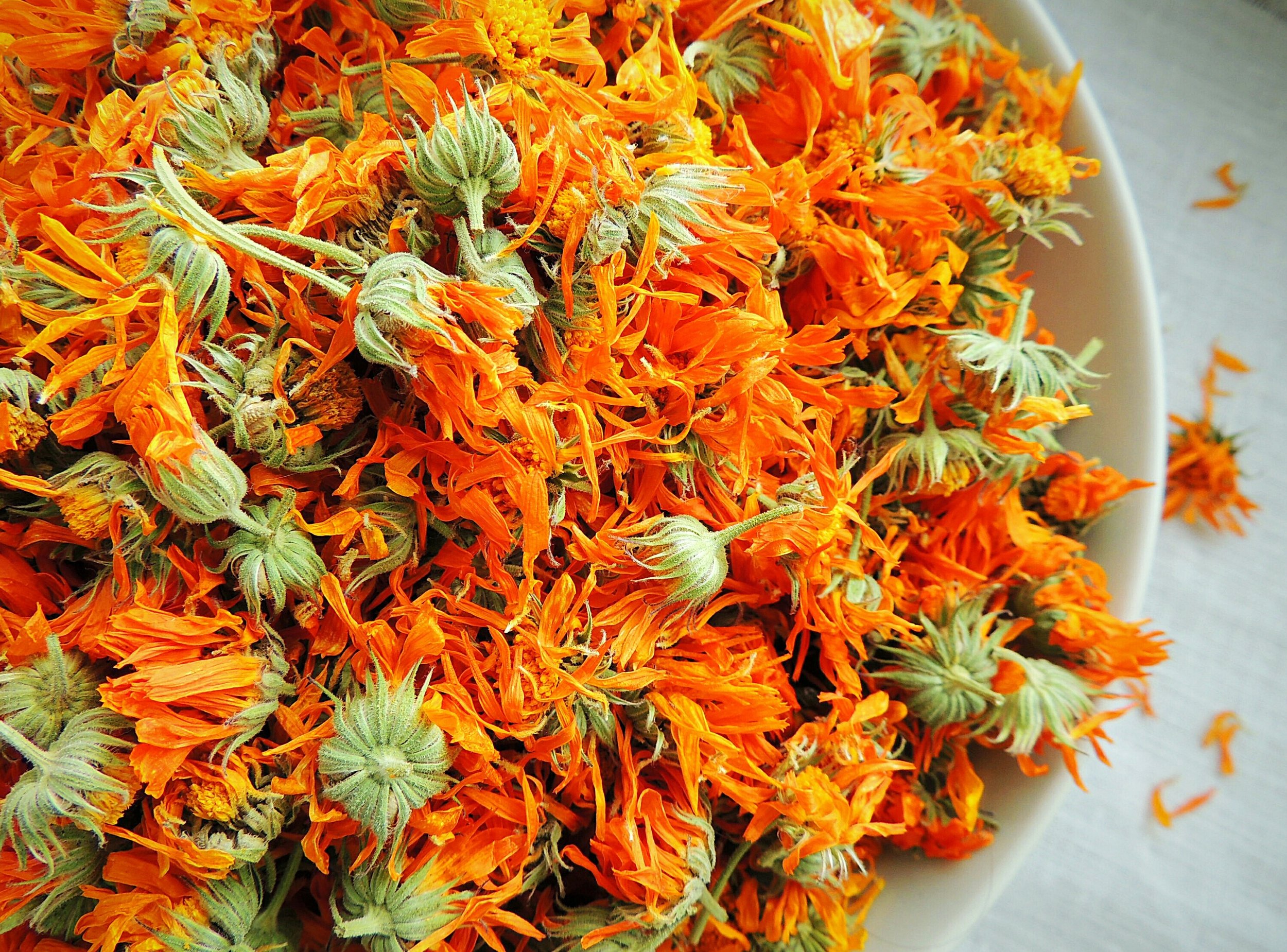
Drying is one of the most important steps when you're preparing calendula for an oil infusion.
Fresh flowers contain water. Trapping that moisture in oil can contribute to spoilage, so thoroughly dried plant material and clean, dry equipment are essential.
Air-drying
Spread your flower heads in a single layer on a clean mesh screen or drying rack.
Keep them somewhere dry, shaded, and well ventilated.
Allow plenty of space between the flowers and turn them as needed.
Check the thick centers carefully before storing.
Drying time depends on humidity, temperature, airflow, and flower size. Whole calendula heads can take considerably longer than loose petals, so don't rely on a fixed number of days.
The flowers should be thoroughly dry throughout, including their dense centers.
Using a dehydrator
A food dehydrator with a low-temperature herb setting can make drying more consistent, particularly during our damp Pacific Northwest weather.
Arrange the flowers in a single layer with space between them. Follow your dehydrator's herb-drying guidance and check the thick flower bases before removing them.
Again, dryness matters more than the number of hours on the clock.
Storing your harvest
Transfer completely dried flowers to a clean, dry container.
Label it with the plant name and harvest date, then store it somewhere cool, dark, and protected from moisture.
Check stored herbs periodically. If you notice mold, moisture, or an unusual odor, discard them.
Future you will be delighted to discover a properly labeled jar of golden calendula in the middle of winter.
Trust me.
How to Make Calendula-Infused Oil

Calendula-infused oil is a traditional ingredient in handmade body-care preparations, including balms and salves.
The basic idea is simple: thoroughly dried flowers are combined with a carrier oil, allowing some of the plant's oil-soluble constituents to move into the oil over time.
For a small home project, you'll need:
Thoroughly dried calendula flower heads
A clean, completely dry glass jar with a lid
A fresh carrier oil, such as olive or sweet almond oil
A clean, dry strainer or cheesecloth
A clean, dry bottle for the finished oil
A note about jojoba: Although commonly called an oil, jojoba is technically a liquid wax. It can be used in botanical preparations, but it behaves differently from many culinary carrier oils.
A traditional room-temperature infusion
Place your thoroughly dried calendula flowers in the clean, dry jar.
Pour in enough carrier oil to cover the flowers completely.
Stir with a clean, dry utensil to release trapped air bubbles.
Close the jar and place it somewhere protected from excessive heat and direct sunlight.
Allow the flowers to infuse for several weeks.
Strain thoroughly into a clean, dry container and label the finished oil.
Keep all equipment and plant material dry throughout the process.
I don't recommend assigning every homemade infused oil a universal shelf life. The carrier oil, quality of the dried herbs, preparation method, and storage conditions all affect how well it keeps.
Store your finished oil away from heat and light. Discard it if you notice an off odor, mold, or other signs of deterioration.
And remember: this is a homemade cosmetic ingredient, not a sterile preparation for treating wounds or infections.
A Simple Calendula Salve

A sunshine balm for moisturizing and softening dry skin.
Once you've prepared your calendula-infused oil, you can turn some of it into a simple, unscented balm.
This is a lovely project for dry, intact skin, particularly when the weather turns cold. My husband loves to use it for his dry heels to prevent cracks in the winter.
Ingredients
1 cup calendula-infused oil
1 ounce beeswax pellets, by weight
Clean, completely dry tins or jars
The finished texture will depend on your carrier oil and beeswax. Make a small test batch first if you prefer a softer or firmer balm.
Instructions
Set up a double boiler over gently simmering water.
Add the infused oil and beeswax to the upper vessel.
Heat gently, stirring until the beeswax has melted.
Carefully pour the mixture into clean, dry containers.
Allow the salve to cool and solidify completely before closing and labeling.
Store your finished salve somewhere cool and dry, away from direct sunlight. Make small batches, use clean hands or a clean utensil, and discard any product that develops an unusual smell, appearance, or texture.
A little skin-care caution: Botanical ingredients can cause irritation or allergic reactions, particularly for people sensitive to plants in the daisy family. Patch-test before wider use. This homemade salve isn't intended for burns, open wounds, infected skin, or medical treatment.
I've left essential oils out of this version intentionally. Calendula and a simple carrier oil are enough for a lovely home project without adding another potential source of skin irritation.
Magical & Ritual Uses for Calendula
Calendula has long been associated with the sun in various folk and contemporary magical traditions.
Its brilliant flowers make it a natural symbol of warmth, vitality, joy, and the returning light.
If you work with seasonal ritual, there are plenty of beautiful ways to incorporate calendula into your practice.
Solar altar: Place dried blossoms on your altar as a symbol of warmth, gratitude, or personal renewal.
Seasonal offerings: Include calendula in a flower arrangement honoring the summer solstice or another meaningful turning point in the year.
Ritual sachets: Combine thoroughly dried calendula with other botanicals that hold personal significance.
Journaling ritual: Place a few blossoms beside your journal while reflecting on what you've been growing in your own life.
Anointing Ritual: Use a tiny amount of your calendula-infused oil to anoint an unlit candle, setting an intention for joy, warmth, abundance, or renewal. (Keep the oil away from the wick and any area that will burn, and wipe away any excess before lighting.)
My favorite calendula ritual is pretty simple.
I harvest a few flowers, sit in the sunshine, and take a few minutes to listen carefully to my immediate surroundings. I note the feel of the sunshine on my face and listen for the sound of wind, birds, insects and my steady breath. This practice always fills my heart with such gratitude for the abundance surrounding me in this season.
From the Garden to the Teacup
One of my favorite things about working with herbs is discovering how a single botanical can appear in so many different preparations.
Calendula might begin as a seed in the garden, become a golden flower in a drying basket, find its way into an infused oil, and eventually appear as one ingredient in a thoughtfully blended cup of tea.
Here at The Daily Ritual, you'll find calendula in several of our herbal tea formulas.
Cure for the Collywobbles
Calendula is one of the key botanicals in this digestive support blend from our herbal tea collection.
[Shop Cure for the Collywobbles →]
Summer Garden
A garden-inspired tea featuring calendula among its botanical ingredients. Delicious hot or iced.
Brigid - Morning Light
Our morning ritual blend brings calendula together with rooibos, tulsi, rose, hibiscus, rosehips, lemon verbena, ginger, orange peel, cinnamon, and vanilla. Created to gently support women in our third chapter.
Each blend has its own personality. Calendula is one part of the recipe, contributing to a larger botanical composition rather than defining the entire cup.
Whether you're growing your own calendula or simply curious about discovering it in a tea blend, you're invited to explore the collection.
A Little Sunshine to Carry Forward
That's what I love most about calendula.
It asks us to participate.
To plant something. To tend it. To notice when it flowers. To gather what we need and preserve a little of the season for later.
And when the garden is bare and the days grow short, there's something quietly wonderful about opening a jar of dried golden blossoms and remembering the warmth of summer.
Daily Reflection: What have you been tending lately that deserves a little more patience, attention, or sunshine?
May your garden grow wild, your harvest be abundant, and your rituals bring you home to yourself.
And as always, my friend, take care of you.
— Melody
The Daily Ritual Nursery & Apothecary
