
August: A Month Written in Shadow and Light
August 1
Ah, come, we have arrived at Lughnasadh, when the hot golden sun marries the seed. The first of August sets into motion the first of our three pagan harvest festivals. The exact midpoint between Litha, the summer solstice, and Mabon, the autumn equinox. It seems the sky will also celebrate with us throughout the month while she puts on more than a couple fantastical shows. So, let us dance under the light while we honor this celebration point of the grain and first fruits, and honor the abundance of the Earth before the descent into the darker half of the year.
This time in our calendar year is named Lughnasadh in tandem with Lammas. There is rich history behind these names that clue us in to the significance of their true meaning. Lammas translates from Old English to “loaf mass,” where the first loaves of bread baked from the new grain crop were blessed, while Lughnasadh translates from Celtic mythology as “games, or funeral feast of Lugh”. Lugh was the Celtic sun god who established the festival to honor his foster mother, Tailtiu, who died of exhaustion after clearing Ireland’s plains for agriculture.
Whether you speak Lughnasadh or Lammas, this time of year is a bitter-sweet shift. It is a time of extreme gratitude but also a turning point. The days are noticeably shortening, the sun’s power is starting to wane, and the energetic shift toward autumn begins. But before it’s too late, we will dance in the glow of the summer sun and keep our eyes to the sky for the beautiful gifts that come to us this August.
August 12

We must ride on the Spear of Lugh on the night of August 12th. In mythology, Lugh is a master craftsman associated with a magical, fiery spear. The stunning Perseid meteor shower with its brilliant sparks of the high-summer sun burning across the night sky as it prepares to hand the reins over to autumn is the cosmos putting on a grand, fiery finale for the season.
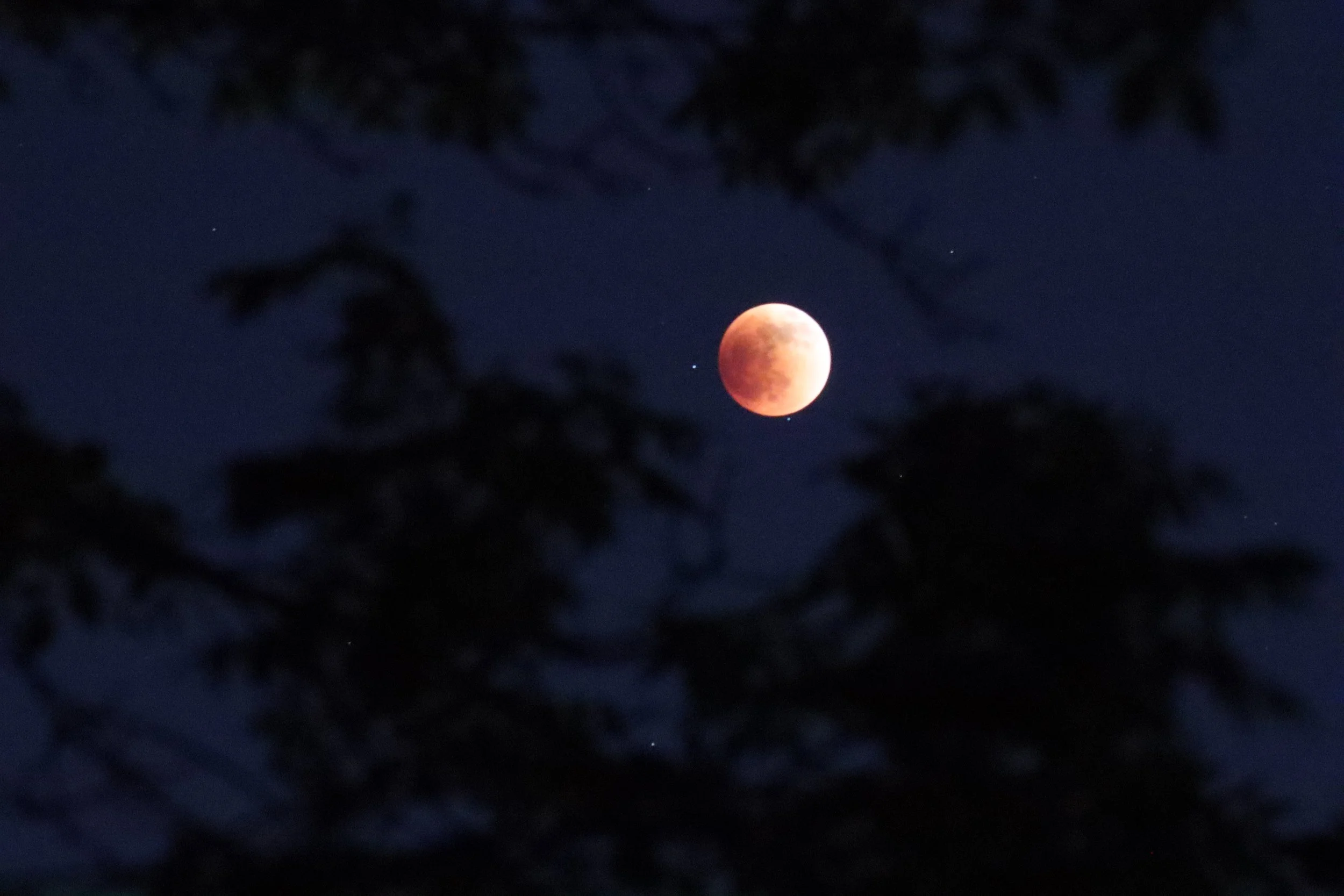
Lughnasadh is fundamentally about the sun king willingly sacrificing his energy so the crops can grow. The solar eclipse that is happening on the very same night as this meteor shower is a literal, visual representation of the sun “dying” or dimming to usher in the harvest season. The Blood Moon at the end of the month acts as a cosmic transition point, pulling us deeper into the shadow and intuition of the coming autumn.
The blackened sky under the dark moon in tandem with the meteor shower provides the absolute best viewing conditions possible for such a display. It seems only logical to celebrate this perfect cosmic alignment.
If you were sitting beside an old hedge witch deep in the forest, she probably wouldn’t think of the night as one for grand spells or forcing change. A new moon is traditionally a time of planting intentions in darkness while the Perseid meteor shower is a fleeting display, something ancient people often saw as the heavens scattering blessings, omens, or messages.
In honor of this rare culmination under the new moon, I will include a ritual you may choose to do on this night, as well as my usual full moon rituals that are offered at the bottom of this blog.
August 28
August 28th is our Full Moon and Partial Lunar Eclipse. It’s known as the Full Sturgeon Moon to most, but here in the Pacific Northwest, our local Tlingit Tribe names our August Luna “Shadow Mountain Moon”. On this night, nearly 96% of the Moon will slip into Earth’s shadow. It will look slightly reddish-orange.
The Shadow offered within this month is no accident. With the earth cast in shadow, so too are we. To associate the darkness with our own fears and doubts means to bathe in them, learn from them. The strength of the witch is to sus out that which no longer serves us, namely: fear and doubt. This is an ideal time for finishing projects, both externally and that of the soul.
A full moon already carries a long history in many cultures as a time of culmination, illumination, and reflection. A partial lunar eclipse adds another layer: historically. eclipses have been interpreted in many different ways— as omens, sacred pauses, or reminders of the changing heavens. There is no single ancient witch’s tradition for eclipses, and modern practitioners vary widely. Some avoid magical working during eclipses, while others see them as powerful times for contemplation and release. Let your heart be your guide on which path feels correct for you.
If you imagine an old woman living alone in the cedar woods of the Pacific Northwest, her ritual might not be dramatic at all. She would know that the moon does not lose herself during an eclipse, she merely passes briefly through Earth’s shadow.
I’ll leave a second ritual for you to follow, or not, on this special night. Even if a full ritual doesn’t seem to serve you, it may be wise to leave yourself to hover over a poignant question or two:
What new path is opening for me?
What do I need to release before the end of summer?
The Ritual of Falling Stars & Hidden Seeds
For the night of August 12th
Options you may wish to include in tonight’s ritual:
A black or beeswax candle
A bowl of spring water
A small handfull of seeds (wildflowers, herbs, acorns… anything that grows)
Mugwort, pine, cedar, or rosemary (whichever calls to you)
A smooth stone from a stream or forest path
A journal
Step One: Walk in Silence
Leave your home after twilight. Say nothing for the first several minutes. Listen instead.
Notice which insects are singing, the scent of the air, whether an owl calls, the feeling beneath your feet. In many folk traditions, silence before ritual allows the world to speak first.
Step Two: Build a Tiny Hearth
Light your candle. Place the bowl of water beside it so the starlight reflects on the surface. Lay your herbs nearby— not to burn necessarily, but simply as companions from the land.
Step Three: The Empty Moon
Close your eyes. The new moon hides herself. Imagine placing into that darkness: old fears, old identities, expectations that no longer fit. Not to banish them… simply to let them rest where no one needs to carry them.
Step Four: Watch the Sky
Each meteor is a reminder that even things that burn brightly do not stay forever. Every shooting star you see, whisper only one word. It may be courage, or wonder, it may be patience, home, or anything else that feels true to you tonight. No elaborate petitions. Only seeds.
Step Five: Bless the Seeds
Hold the seeds in your hands. Pass them briefly over the candle’s warmth (not through the flame). Touch them to the bowl of water. Then say something simple: “What is meant to grow, grows. What is meant to rest, rests. May I walk with both.”
Step Six: The Stone
Hold the stone. Think of one thing that has remained steady through every season of your life. Not perfect, but simply enduring. Keep that stone in your pocket until the next full moon.
Step Seven: Leave an Offering
Old woodland traditions often emphasize reciprocity. Leave something harmless and biodegradable. A little spring water poured at the roots of a tree, birdseed, a heartfelt thank-you spoken aloud. Avoid leaving crystals, candles, ribbons, coins, or food that could harm wildlife.
Do not chase the falling stars. They are already on their journey. Instead, become the soil that remembers where they landed.
The Ritual of the Shadowed Moon
For the night of August 28th
You may choose to gather:
A white candle
A black candle
A bowl of fresh water
A small mirror
Cedar, mugwort, juniper, or pine
A length of natural twine
A bell or small chime
Step One: Walk Between Worlds
Before moonrise, wander your familiar path through the trees. Collect nothing. Take only notice. Tves the forest offers different gifts on different nights. Tonight, observation is enough.
Step Two: Kindle Two Flames
Place the candles several inches apart. Light the white candle first, then the black. The two flames remind you that light and shadow belong to one another.
Say: “Nothing whole fears its shadow. Nothing true is lost in darkness.”
Step Three: The Mirror and the Water
Place the mirror beneath the bowl so that water rests above the reflection. Look into the water rather than directly into yourself. Ask quietly: “What truth have I hidden from my own eyes?”
Do not force an answer. Simply wait.
Step Four:As Earth’s Shadow Touches the Moon
When the eclipse begins, extinguish the white candle. Leave only the black candle burning. Sit without speaking. Listen to the wind. Watch the changing light. Silence can reveal more than words.
Step Five: The Thread
Tie one loose knot in the twine for each burden you are ready to lay down. Perhaps an old grief, a habit, resentment, fear of beginning, fear of ending. You need not name them aloud. When the eclipse reaches its deepest point, untie every knot. Do not cut the cord. Simply loosen what has been held too tightly.
Step Six: When the Moon Brightens Again
Relight the white candle from the black candle’s flame. Not because darkness has been defeated, but because both have become one fire. Say: “I welcome what returns. I honor what departed. I carry forward only what is mine.”
Step Seven: An Offering
Pour the bowl of water at the roots of an old tree. Touch its bark. Thank the land for witnessing your intentions.
The Moon was never wounded. She only wore the Earth’s shadow for a while. Remember this when sorrow visits you. Passing beneath darkness does not diminish your light. It teaches you how faithfully it returns.