
5 Herbs That Would’ve Gotten You Burned at the Stake
Five poisonous plants, flying ointments, screaming roots, and the stories that made them infamous.
Hello, my friend!
Picture it.
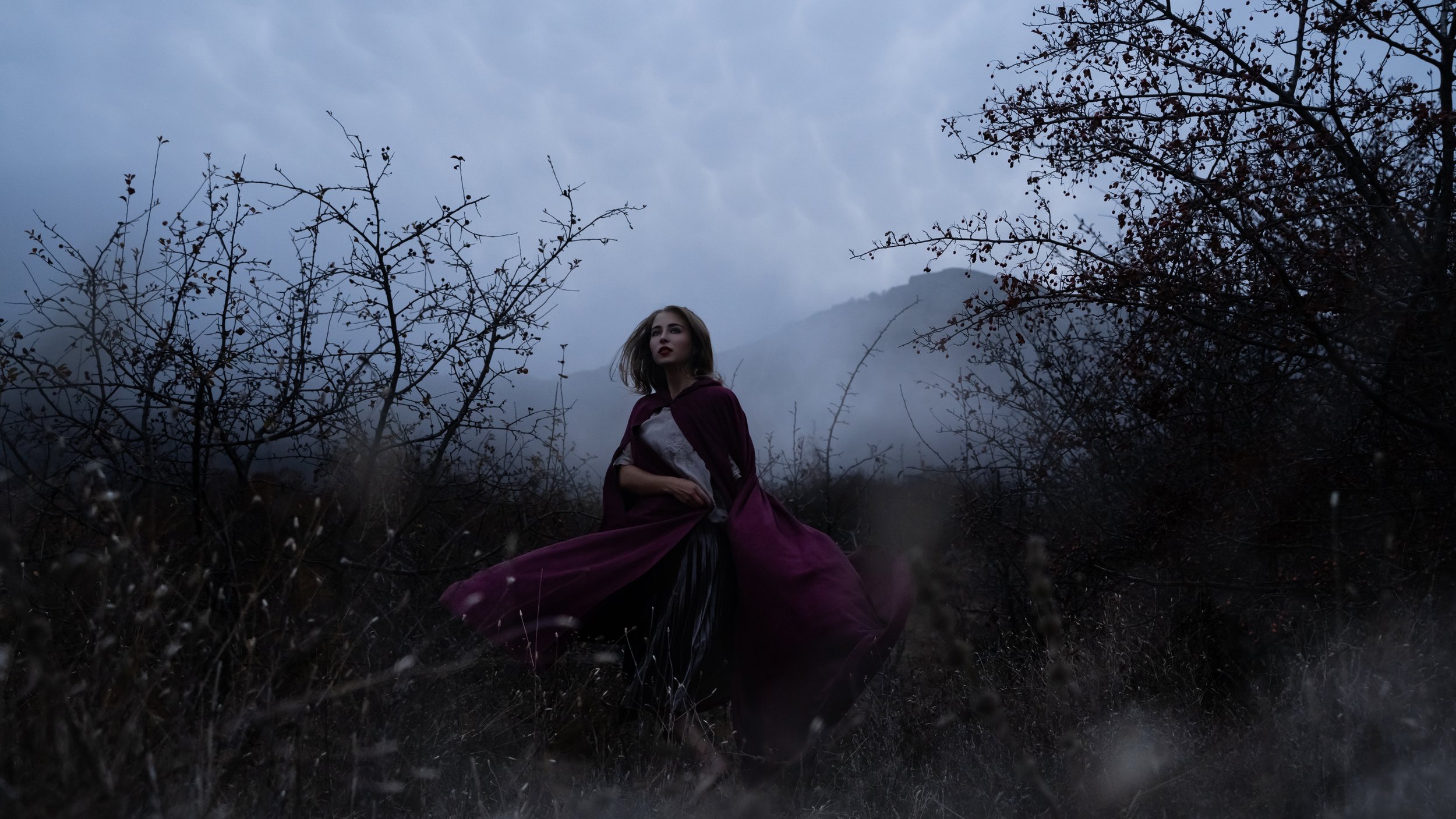
A woman runs across a moonlit meadow, her apron pockets stuffed with herbs, while an angry mob follows close behind.
What was her crime? Knowing which plants grew in the hedgerows? Making a salve? Being a little too independent for the comfort of her neighbors?
It’s a deliciously theatrical image.
It’s also a story that deserves a closer look.
We’ve inherited a popular narrative about the European witch trials: wise women, midwives, and herbal healers were persecuted because their knowledge threatened powerful institutions.
Some accused people did practice healing. But historian David Harley’s examination of the trial record found that midwives were rarely accused, and that a handful of memorable cases had been mistaken for a general pattern.
The broader history is more complicated, more varied, and, in some ways, more unsettling than the legend.
And then there are the plants.
Deadly nightshades. Human-shaped roots. Flowers associated with poison, visions, and supernatural flight.
Their reputations have grown through centuries of medicine, folklore, religious controversy, and storytelling.
Today, we’re opening the darker drawers of the botanical cabinet to meet five of them.
A quick safety note: Several plants discussed below are extremely poisonous. We’re exploring history, folklore, and botanical science, not recommending that you harvest, ingest, burn, or prepare them. Historical use does not establish safety.
1. Belladonna: Beautiful but Deadly
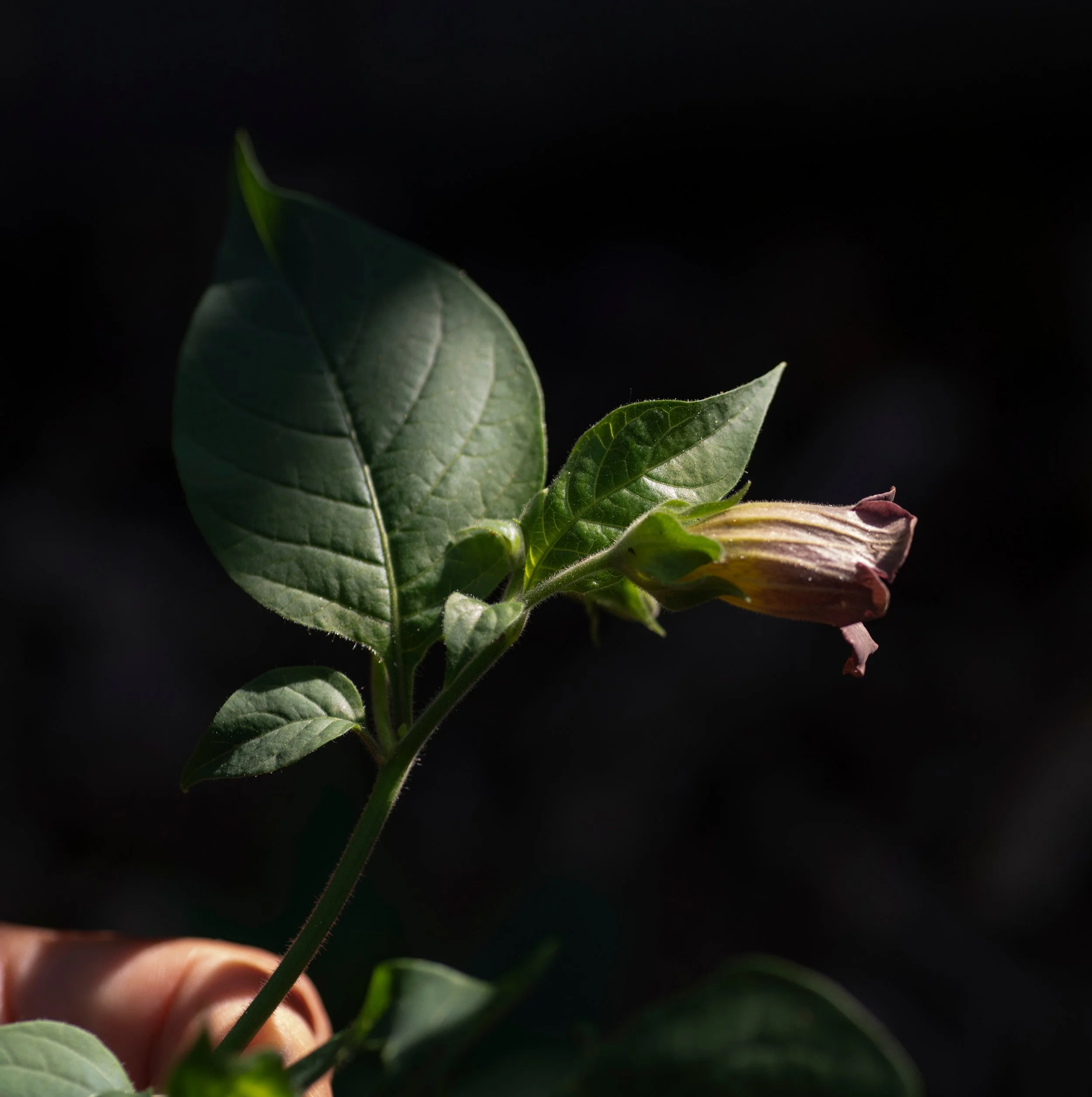
Atropa belladonna
Belladonna has the sort of name that belongs to a beautiful woman with a terrible secret.
Its Italian name means “beautiful woman” and is traditionally associated with the historical cosmetic practice of dilating the pupils.
Also known as deadly nightshade, belladonna contains tropane alkaloids that interfere with normal nervous-system signaling.
Poisoning can cause dilated pupils, dry mouth, rapid heartbeat, confusion, delirium, and potentially fatal complications.
In other words, this is not a plant for casual experimentation.
The rumor: Belladonna helped witches fly.
Belladonna appears in discussions of witches’ flying ointments: mysterious preparations supposedly applied to the body before journeys through the night.
The theory is that certain poisonous plants could produce experiences later interpreted as supernatural flight.
It’s an intriguing explanation.
But here’s the twist.
Historian Michael Ostling describes how some early writers proposed intoxicating ointments precisely because they doubted that witches could physically fly. If an ointment produced the experience, then the supposed journey might have been an illusion rather than evidence of a supernatural crime.
Other writers insisted that the Devil enabled real flight and treated the ointment as a symbol of witchcraft’s alleged depravity.
In more recent retellings, the theory sometimes changed direction again: the ointment became supposed evidence of a secret, historically practiced form of visionary witchcraft.
One ointment. Several competing explanations. Centuries of storytelling.
And, as Ostling emphasizes, no evidence establishing that an accused witch actually used a hallucinogenic flying ointment.
The botanical reality: Belladonna is highly toxic. Its chemical composition varies, and homemade preparations can cause severe poisoning.
Beautiful? Maybe a little sinister? Certainly.
Something to experiment with? Yeah, not a chance.
2. Mandrake: The Root That Screamed
Mandragora officinarum
If any plant was destined for a starring role in a witch’s cabinet, it was mandrake.
Its forked roots sometimes resemble little human figures, inspiring a remarkable collection of stories about its extraordinary powers.
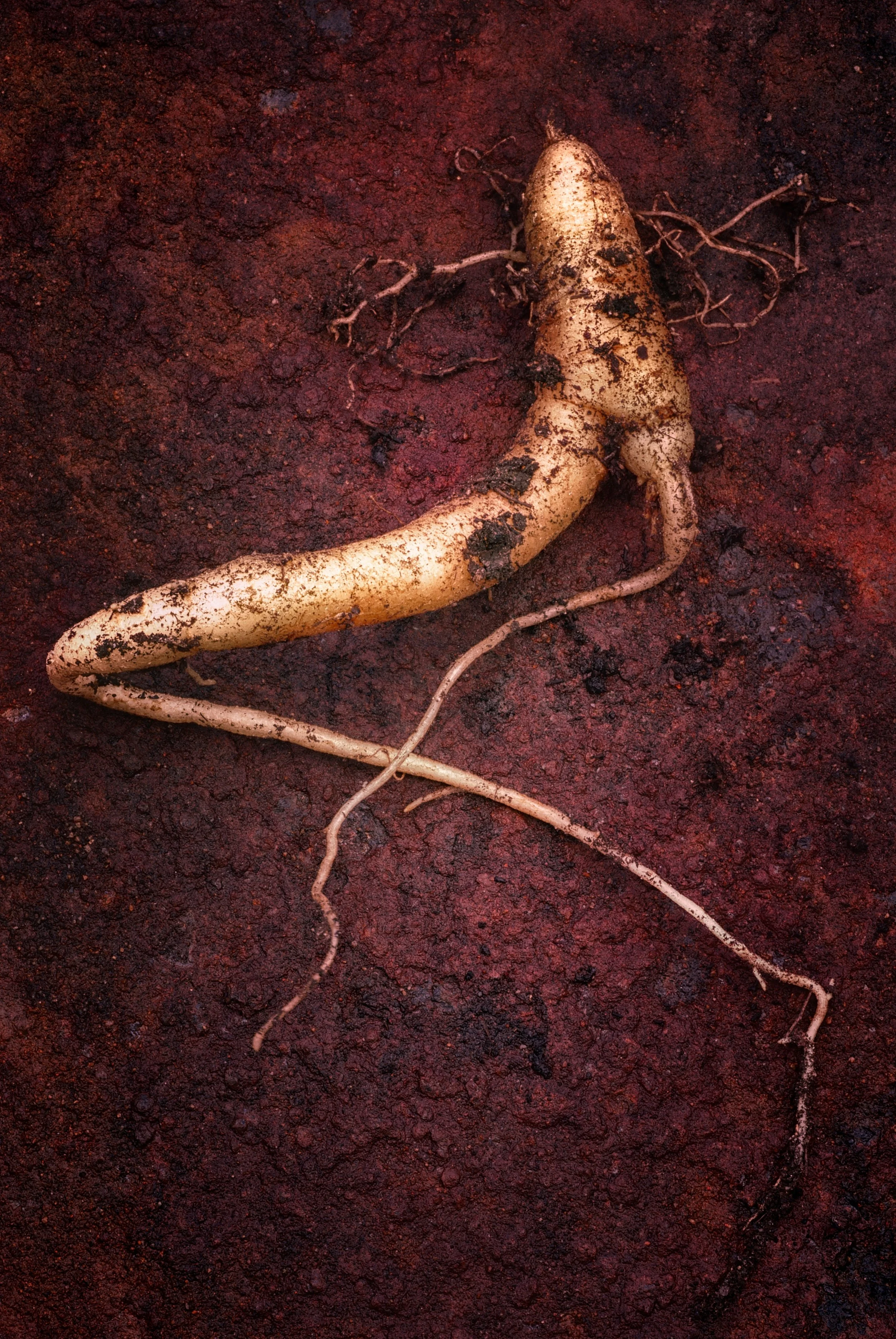
Mandrake became associated with fertility, protection, magic, and unusual potency.
But its most famous legend concerns the harvest.
The rumor: Pull a mandrake from the earth, and its scream will kill you.
According to versions of the legend, uprooting a mandrake unleashed a terrible cry capable of killing or driving the unfortunate harvester mad.
Some stories describe elaborate methods for avoiding the scream, including tying the root to an animal and letting the creature pull it free.
The details changed across tellings, but the image endured: a plant so dangerous that even removing it from the soil required supernatural precautions.
It’s exactly the sort of story that gets better around a fire.
Mandrake also has a history of medicinal use, including as a sedative. 10/10 do not recommend.
Like belladonna, mandrake contains toxic tropane alkaloids.
The botanical reality: Mandrake is among the poisonous plants identified by the California Poison Control System as capable of causing serious anticholinergic poisoning (a toxic state triggered when a plant's compounds block a critical neurotransmitter, causing dangerous spikes in heart rate, confusion, and organ strain). It belongs in botanical history and folklore, not a home remedy.
Some plants belong on the apothecary shelf.
This one is better left in the storybook.
3. Henbane: The Witch’s Flying Ointment
Hyoscyamus niger
Henbane doesn’t need much help looking unsettling.
Its pale flowers are threaded with dark purple veins, giving them an almost bruised appearance.
It looks perfectly at home in a medieval manuscript about suspicious happenings.
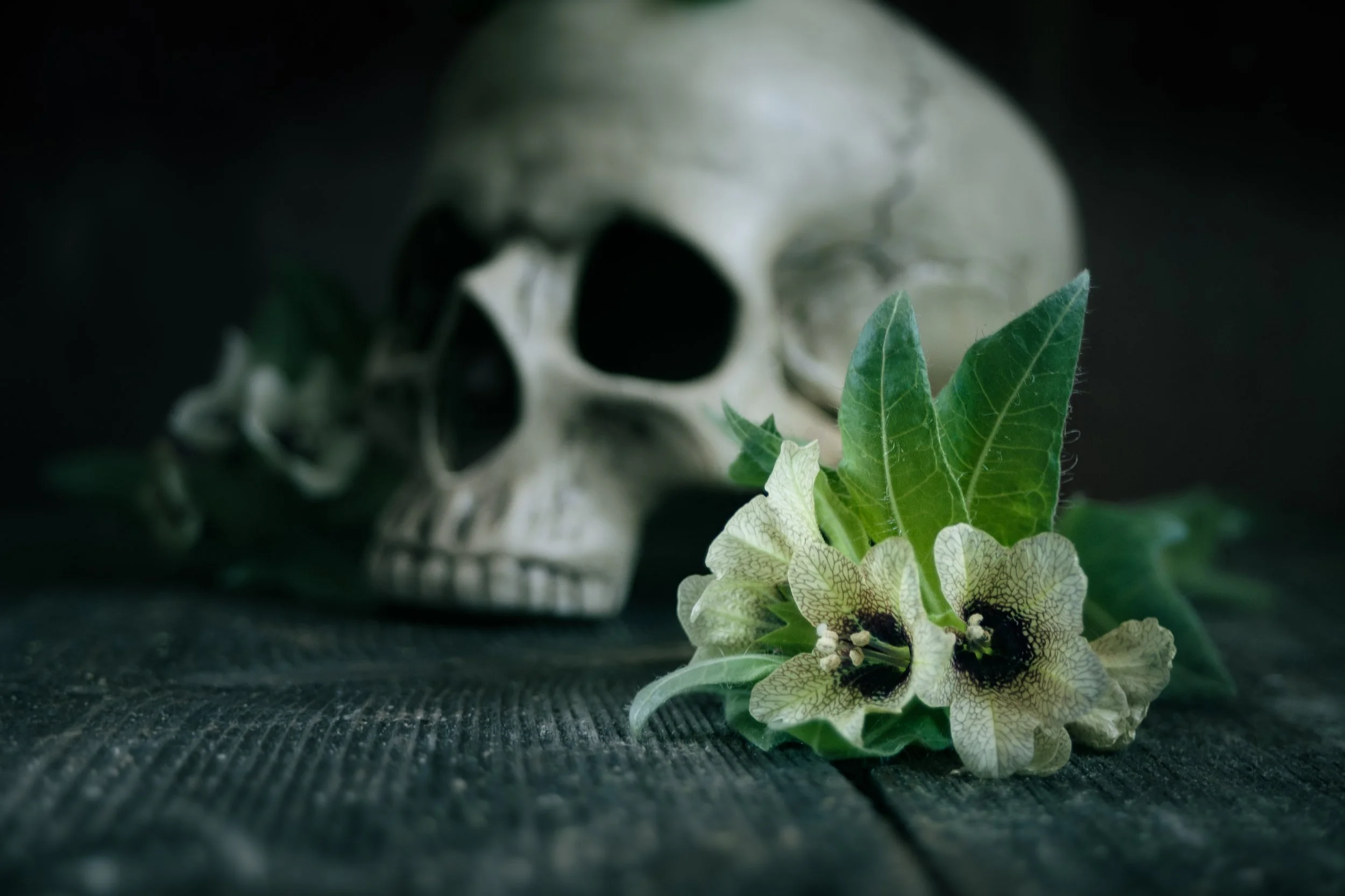
Henbane has a long history of medicinal and poisonous use. It contains tropane alkaloids capable of causing delirium, agitation, hallucinations, and dangerous effects on the body.
The rumor: Henbane was the secret ingredient behind the broomstick.
Henbane frequently appears in modern reconstructions of witches’ flying ointments.
According to the theory, preparations containing poisonous nightshades produced sensations later interpreted as flight, spirit travel, or attendance at witches’ gatherings.
It’s a wonderfully tidy explanation for one of witchcraft’s most recognizable images.
Perhaps a little too tidy.
Historical accounts of alleged ointments were written for different reasons. Some authors were attempting to explain supernatural claims. Others believed they were describing evidence of dealings with the Devil.
Modern writers then interpreted those accounts through the lens of plant chemistry.
These are different layers of storytelling, and none establishes that accused witches routinely used a standard herbal recipe.
We can enjoy the theory without mistaking it for a recovered instruction manual.
The botanical reality: Henbane is highly toxic. Burning it or making homemade preparations is not a safe way to explore its effects.
Admire the eerie flowers.
Leave the poison alone.
4. Aconite: Wolfsbane and the Monsters at the Door
Aconitum napellus
Ah, wolfsbane.
Few plants arrive with a more dramatic collection of names.
Also called monkshood for the shape of its hooded blossoms, aconite has become entangled with stories about wolves, monsters, poison, and protection.
Its blue-purple flowers are striking.
Its chemistry is considerably less charming.
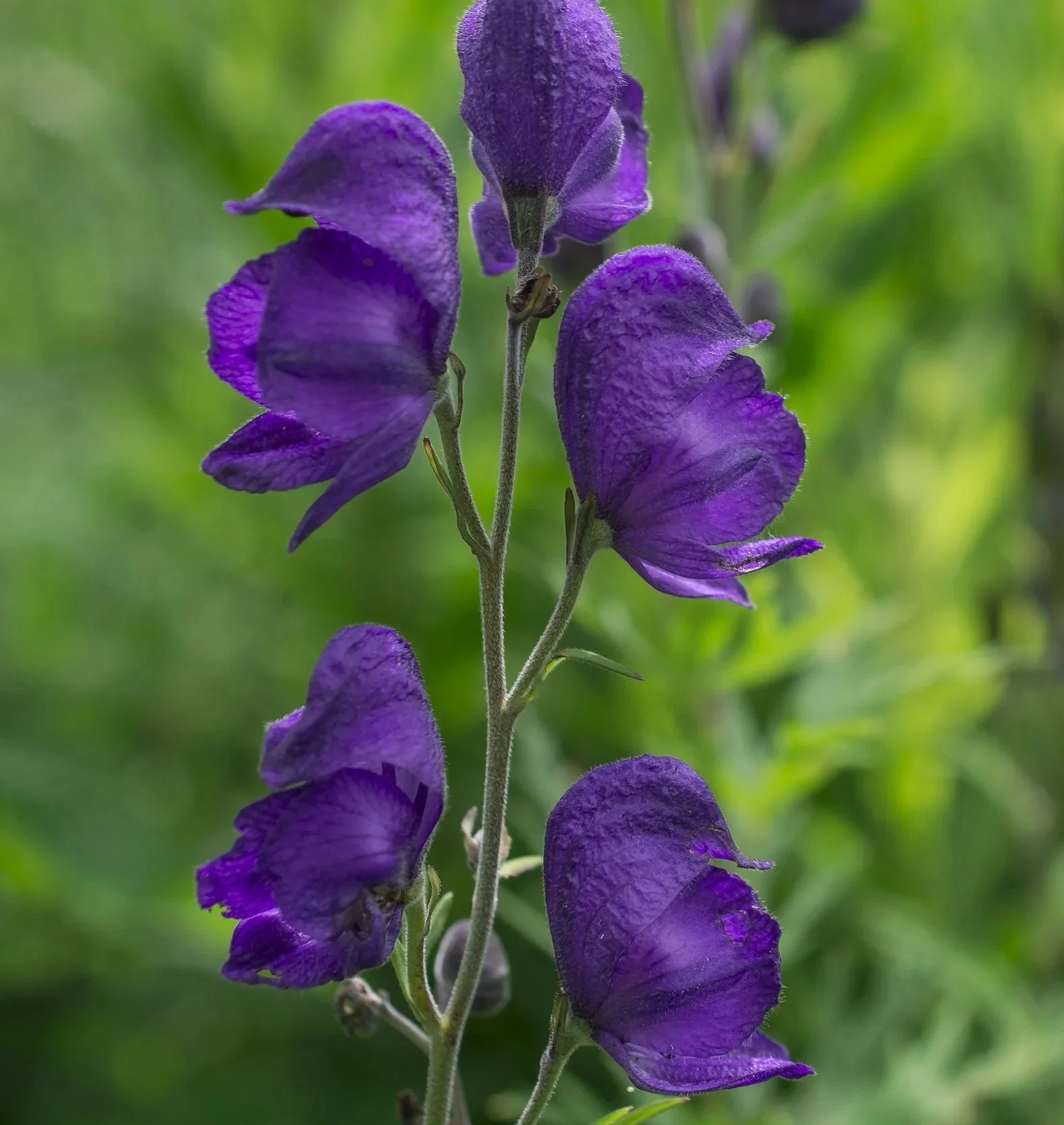
Aconite contains extremely toxic alkaloids, including aconitine, which can interfere with electrical signaling in the heart and nervous system.
The rumor: Wolfsbane protects against werewolves.
Wolfsbane’s reputation connects it to stories about wolves and, in later folklore and popular culture, werewolves.
Its associations with poison have also made it a natural ingredient in tales of murder, treachery, and forbidden knowledge.
But appearing in a werewolf story doesn’t establish that aconite was a standard ingredient in witchcraft, or that possessing it would have sent someone to the stake.
Sometimes a plant becomes famous because of what people fear it might do.
Sometimes the danger is entirely real.
And sometimes the legend keeps growing long after the original story has changed.
The botanical reality: Aconite is exceptionally poisonous and can cause fatal heart-rhythm disturbances. It is not suitable for home herbal preparations.
This is one plant whose fearsome reputation has a very real foundation.
5. Datura: The Flower of Dangerous Dreams
Datura species
Datura is a plant of extraordinary contrasts.
Its trumpet-shaped flowers can be breathtakingly beautiful. Some species produce spiny seed capsules that look as though they belong in a cabinet of curiosities.
Its chemistry, however, is unforgiving.
Datura contains tropane alkaloids capable of causing severe poisoning, including confusion, agitation, delirium, dangerous changes in body temperature, seizures, coma, and death.
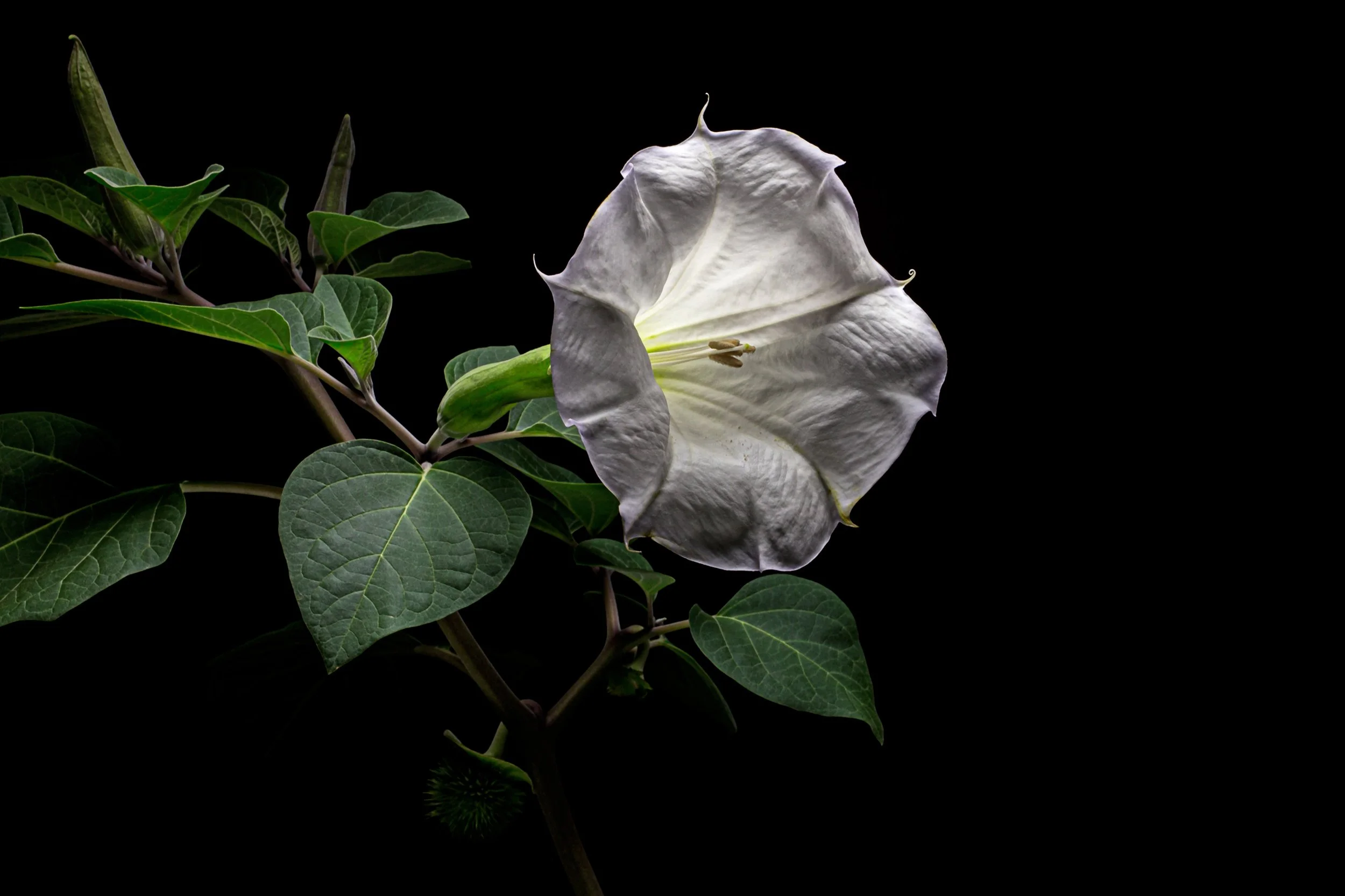
The rumor: Datura opens a doorway to other worlds.
Different Datura species have histories in cultural and ceremonial traditions, including traditions outside Europe.
Those histories deserve to be understood within their own cultural contexts rather than folded into one generic story about European witches.
Modern accounts sometimes connect datura to witches’ flight or visionary experiences.
But the existence of such a theory doesn’t establish a continuous historical practice.
Nor should poisoning be romanticized as a predictable spiritual journey.
The California Poison Control System describes how these plants can produce a severe toxic syndrome, with effects lasting hours or even days.
The botanical reality: Datura poisoning is a medical emergency. This plant is not appropriate for recreational, medicinal, or experimental ritual use.
Some doors are better explored through history.
So, Would These Herbs Really Have Gotten You Burned?
Let’s return to our woman running across the meadow.
Would a handful of belladonna or henbane in her apron have been enough to condemn her?
We can’t make that claim.
European witch trials occurred across different regions and centuries, under different legal systems and social conditions.
Accusations could involve alleged harmful magic, unexplained illness or misfortune, religious beliefs, and conflicts within communities.
Some accused people practiced healing.
Many did not.
And although women made up the majority of those accused in many regions, men were also prosecuted.
Even the burning part of our title needs a footnote.
Historian Diane Purkiss explains that people convicted of witchcraft in England and its American colonies were generally hanged rather than burned. Execution practices differed elsewhere, including Scotland.
The history refuses to fit neatly into a single image.
The enduring myth of the persecuted herbalist
The wise woman punished for her plant knowledge has become a powerful figure in modern storytelling.
She speaks to real concerns about women’s authority, access to medicine, and the historical treatment of people accused of witchcraft.
But historians examining trial records have challenged the claim that midwives and herbalists made up the majority of those prosecuted.
David Harley’s research found that midwives were rarely accused. Some people who practiced medicine did face accusations, but exceptional cases cannot explain the witch trials as a whole.
The truth is not that every accused witch was secretly an herbalist.
The truth is that real people were caught in complex systems of belief, accusation, power, and fear.
Their individual stories deserve more than a convenient modern legend.
Why Do the Flying-Ointment Stories Refuse to Die?
Because they’re frickin irresistible!
They offer a botanical explanation for supernatural flight.
They connect familiar witchcraft imagery to real plants with powerful effects.
And they suggest that beneath the accusations and sensational stories, there might be a hidden practice waiting to be rediscovered.
But the history of the theory is almost as fascinating as the legend itself.
Some early writers proposed intoxicating ointments because they didn’t believe witches could physically fly.
Later interpreters sometimes treated those same ointments as evidence that witches really practiced a secret form of visionary magic.
One theory. Two very different interpretations.
And centuries of storytelling in between.
Folklore itself has a history.
I love herbal history because it asks us to hold two things at once:
Wonder and skepticism.
We can follow the plants, the people, and the stories through history, discovering where the records end, where folklore begins, and where a little mystery remains.
Some Witchcraft for Your Cup
Not every plant with a place in magical history belongs in your teacup.
Belladonna, mandrake, henbane, aconite, and datura are best appreciated here as subjects of history, folklore, and botanical study, NOT ingredients for everyday herbal preparations.

Fortunately, the botanical world is full of other plants to get acquainted with.
At The Daily Ritual, we create herbal tea blends for everyday moments of warmth, reflection, and ritual.
If our journey through the darker corners of botanical history has left you curious about the plants in your own cup, come explore the apothecary.
No poisonous nightshades included ;-)
Although a little candlelight and a good ghost story are always welcome!
And as always, my friend, take care of you.
— Melody
The Daily Ritual Nursery & Apothecary
For the Curious: Sources & Further Reading
If you’d like to explore the history and science behind these stories, here are a few places to begin.
Witch trials and the persecuted-healer narrative
Diane Purkiss, “Witchcraft: Eight Myths and Misconceptions,” English Heritage: https://www.english-heritage.org.uk/learn/histories/eight-witchcraft-myths
David Harley, “Historians as Demonologists: The Myth of the Midwife-Witch,” Social History of Medicine 3, no. 1 (1990): 1–26: https://doi.org/10.1093/shm/3.1.1
Flying ointments and their changing interpretations
Michael Ostling, “Babyfat and Belladonna: Witches’ Ointment and the Contestation of Reality,” Magic, Ritual, and Witchcraft 11, no. 1 (2016): 30–72: https://doi.org/10.1353/mrw.2016.0008
Botanical toxicity
California Poison Control System, “Anticholinergic Plants”: https://calpoison.org/content/anticholinergic-plants
