
The Moon That Returned Hungry: Old Pacific Northwest Lore of May’s Blue Moon
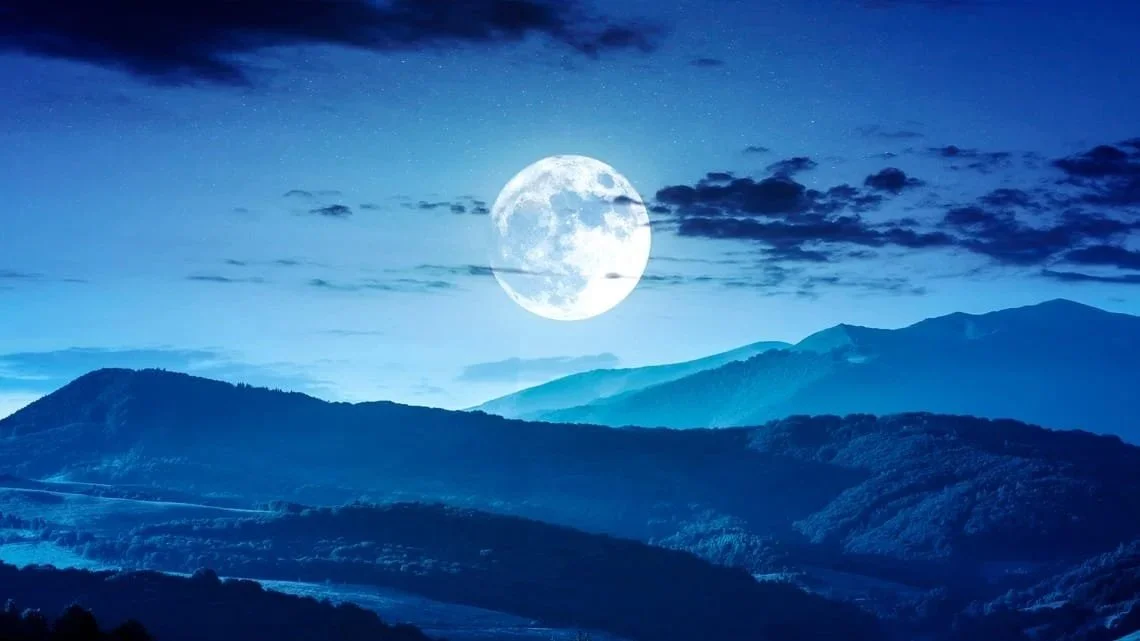
This month, a lantern hung twice over the cedar coast.
Under May’s full moon, the forest does not apologize for its abundance, and neither shall we. If we are to honor this moon the way a witch honors smoke from the cedar and the salt in the air, we must also bow our heads to those that came before us and the history of why this moon is so special. I will close this blog with a ritual to celebrate the prosperity of this months sacred second moon, but before we dance under the light of it, let’s walk through the tradition of why it is so cherished to begin with.
This year, the rare Blue Moon happens to arrive alongside the season traditionally associated with the Strawberry Moon, allowing these stories and symbols to overlap in a particularly meaningful way. The second May full moon would have felt especially uncanny historically because lunar calendars and agricultural timing mattered deeply to survival. Rare moons were often interpreted as signs of imbalance, omen years, or spiritually “thin” nights. While Samhain’s thin veil is considered “the dark veil”, marking its end of harvests and beginning of winter, an opening time for spirits of the dead and the darker, Summer Solstice is its counterpart. Litha’s thin veil opens for the light, for the more vibrant and bright forces, most notably the faerie realm. The air around these thinning veils always creates heightened intuition, more vivid dreams, unexplained smells (like smoke or wildflowers), and a profound sense of spiritual presence.
That makes this a moon of thresholds, unfinished business, second chances, hided truths. A moon of repeated lessons, strange luck, crossroads, and endings that refuse to stay buried. We treat the Blue Moon as a time when the veil between what was and what could still become grows thin. Not a harvest moon. Not a beginning moon. A reckoning moon.
This Blue Moon is also a micromoon, meaning the moon is farther from Earth and appears slightly smaller and softer in the sky. The great lantern hangs farther from us. Distant, watchful, cool-headed. A moon for perspective rather than passion, and that is deeply old-magic energy.
We have this spirituality intermixed between the more logical, agricultural norms. Around a 1946 astronomy article, the “Blue Moon” concept became more modern. It gave a grounded name to the astronomical phenomenon of the second moon within a calendar month. Historically, most cultures did not have a separate ancient name specifically for the rare second full moon within a single calendar month.
The old saying “once in a blue moon” was born because these moons are uncommon, appearing only every couple of years when two full moons fit into a single month. But to witches? An extra moon has never felt accidental. It is the moon that arrives uninvited. The moon that slips through the cracks of calendars. The moon that does not belong neatly anywhere.
Besides the Blue Moon title, the June Moon names that people now creatively apply to an unwonted second June full moon feel almost endless. Some whisper titles like Double Strawberry Moon, Honey Moon, Mead Moon, Hot Moon, Garden Moon… She goes by many contemporary names, each stemming from its correlation with something special happening somewhere this moon was shining. Most modern names were popularized through publications like the Maine Farmers’ Almanac in the 1930s, translating Indigenous seasonal markers into English-language folk calendars. But Indigenous moon names were tied to seasonal changes and food cycles, not astrology aesthetics.
The coastal and forest cultures of the Pacific Northwest often viewed natural cycles as relational rather than symbolic. The Tlingit peoples referred to June’s moon as the Birth Moon, honoring the season when many animals give birth. This title is rooted in their correlation to salmon cycles, coastal abundance, and the return of life after long wet winters. The Haida used names translating to “Berries Ripen Moon,” reflecting the gathering of wild berries across the coastal Northwest.
In the Pacific Northwest, June historically marked the transition into a season of salmon runs, camas harvesting, cedar gathering, berry picking, and canoe travel for many Indigenous coastal peoples. A bright full moon during this season would have practical importance for travel, tides, and nighttime visibility. Coastal and forest cultures of the Pacific Northwest often viewed natural cycles as relational rather than symbolic. The moon was less “wish manifestation” and more a living clock connected to tides, spawning, harvest timing, and weather rhythms.
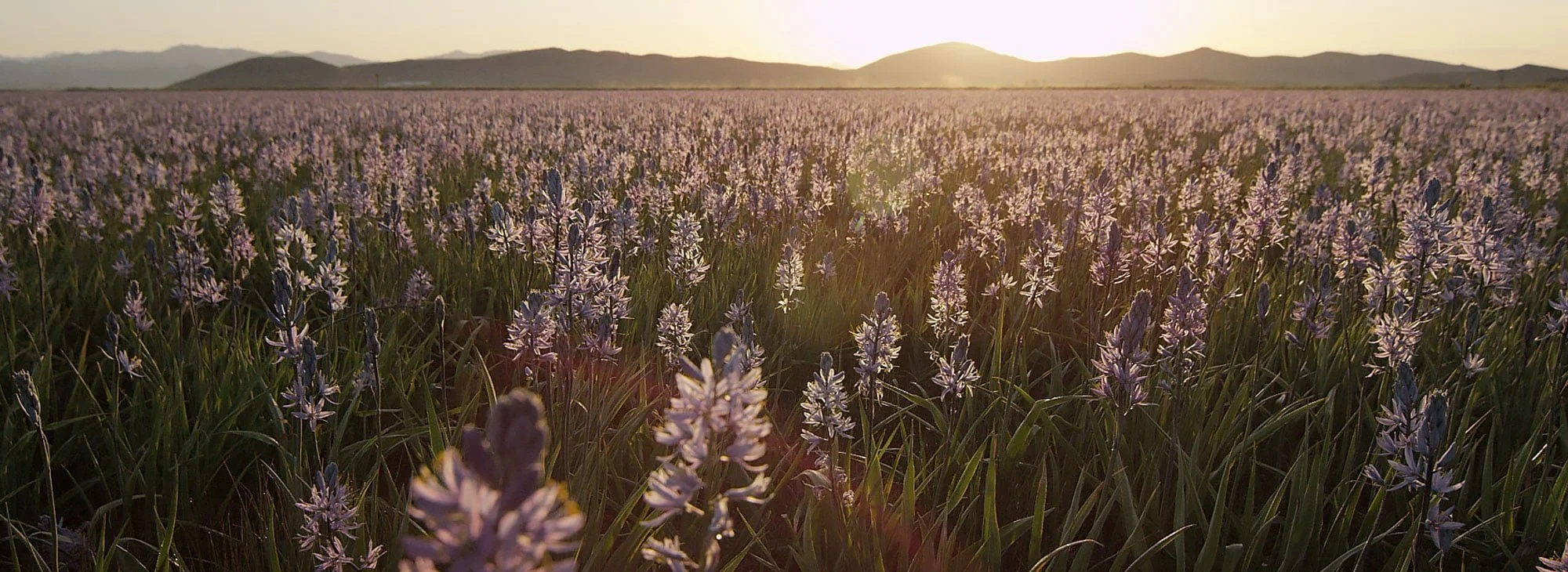
The blue-purple camas flowers would spread across meadows like fallen twilight. Beneath them grew nutrient-rich bulbs harvested carefully and sustainably for generations. The blooming signaled food, season change, labor, community, and survival.

But a name is not a label. It is a key.
It is the moment something becomes singled out from the great blur of existence and called into a relationship. Before a thing is named, it is everywhere and nowhere at once, potential without edges, like mist. After it is named, it has shape. It can be called, remembered, approached… or released.
In older ways of knowing, to speak a name was to acknowledge a soul’s outline. Not ownership, but recognition. And recognition is a kind of magic all its own. It says: you are real enough to be witnessed.
This is why names were guarded in many traditions. Why some were changed after rites of passage. Why some were never spoken aloud except in sacred spaces. Because what is named can be summoned inward, can be strengthened can be anchored to intention, and can also be burdened if spoken carelessly.
So in witchcraft, naming is not a decoration. It is invocation.
It is the act of saying: “this exists, and I am in a relationship with it.”
The name I chose to stick with for this months moon bundle is “The Strawberry Moon”, named by Algonquin tribes to mark the strawberry harvest. June moons sit low and golden on the horizon because of their proximity to the summer solstice. The reddish or amber appearance this often gives them is likely what contributed to mystical associations despite the “Strawberry Moon” not literally being pink. For the sake of what I choose to speak to this month, the proximity to the abundance of the summer solstice, this is the name I speak to.
Ritual of the Returning Strawberry Moon
There are moons for planting. Moons for harvest. Moons for celebration.
But the second moon of May is not a cheerful thing. It is the moon that lingers after the revelry has gone quiet. The lantern still burning when everyone else has gone to sleep.
This moon is for what remains. For truths that followed you into summer. For lessons that returned because they were not yet learned. For the self waiting patiently beneath all your disguises.
A second moon appears when the spirit has more to say.
What to gather:
Two candles (one white or silver for abundance, one dark-colored for transformation)
A small bowl of water
A sprig of rosemary, cedar, lavender, or any local herb
A small offering for the moon (berries, honey, cream, bread, flowers, or herbs)
A journal or small slips of paper
A tiny charm, stone, shell, or token to carry forward
Optional: a bell, chime, or soft music
The Rite:
This moon is rare because it returns. A second lantern hung in the heavens.
A reminder that life sometimes grants us another chance to become who we were trying to be all along.
Light the candle of abundance first. Sit quietly and think upon all that has grown in your life, even the thing that arrived disguised as hardship. The lessons. The survival. The tenderness you fought to keep.
Dip your fingers into the bowl of water and touch your brow, throat, and heart.
Say:
“I honor what has carried me here.”
Now light the darker candle.
On paper, write what within yourself is ready to change. Not what you hate, but what you are prepared to release with love” old fears, silence, self-betrayal, exhaustion, shrinking.
Fold the paper and hold it between your palms beneath the moonlight.
Say:
“As the moon returns full once more, so too may I return to myself renewed.”
Place the paper beneath the bowl, under a stone, or safely burn it if you wish.
Then offer your gift to the moon: berries to the earth, honey to the roots of a tree, herbs to the wind.
Not as a payment. As gratitude.
Finally, hold your chosen token in your hands and whisper one thing you wish to grow stronger within you before the next turning season: courage, softness, discipline, truth, rest, joy.
Keep this token somewhere sacred or carry it with you through the coming weeks.
Closing the Rite:
Stand beneath the sky for one final moment.
Feel the fullness above you and changing tides within you.
Then say:
Moon that rose twice above the wild earth,
thank you for this rare and radiant reminder:
that transformation need not arrive through ruin alone.
That abundance and becoming may walk hand in hand.
Extinguish the candles gently.
Leave a small silence afterward, so the night may answer back.
The Ritual’s Disclaimer:
Do not mistake symbolism for consequence, or intention for effort. What you release does not vanish into air; it changes how you relate to it. So choose carefully what you are ready to be honest about, not just what is easy to write down.
Do not force yourself into emotional states that are not real. The moon does not require performance. If you feel nothing, that is still truth, and truth is enough.
Keep your practices grounded. Fire is fire. Water is water. Candles burn. Smoke rises. Do not drift so far into meaning that you forget safety or presence.
Do not attempt to carry more transformation than your body and mind can hold at once. Real change is usually quieter than people expect, it shows up in choices afterward, not in the moment of the ritual.
And understand this: nothing outside of you is obligated to responde. The ritual is not control. It is alignment. It is a way of speaking clearly to yourself, so your life stops speaking over you.
If you feel unsettled afterward, that is not failure. That is contact with yourself. Drink water. East something grounding. Sleep. Come back to ordinary life gently. The work continues there.